7 signs your Lowcountry roof is asking for help.
Roofs rarely fail without warning. Here are the seven symptoms we see most often on Bluffton and Hilton Head homes — and what each one is really telling you.
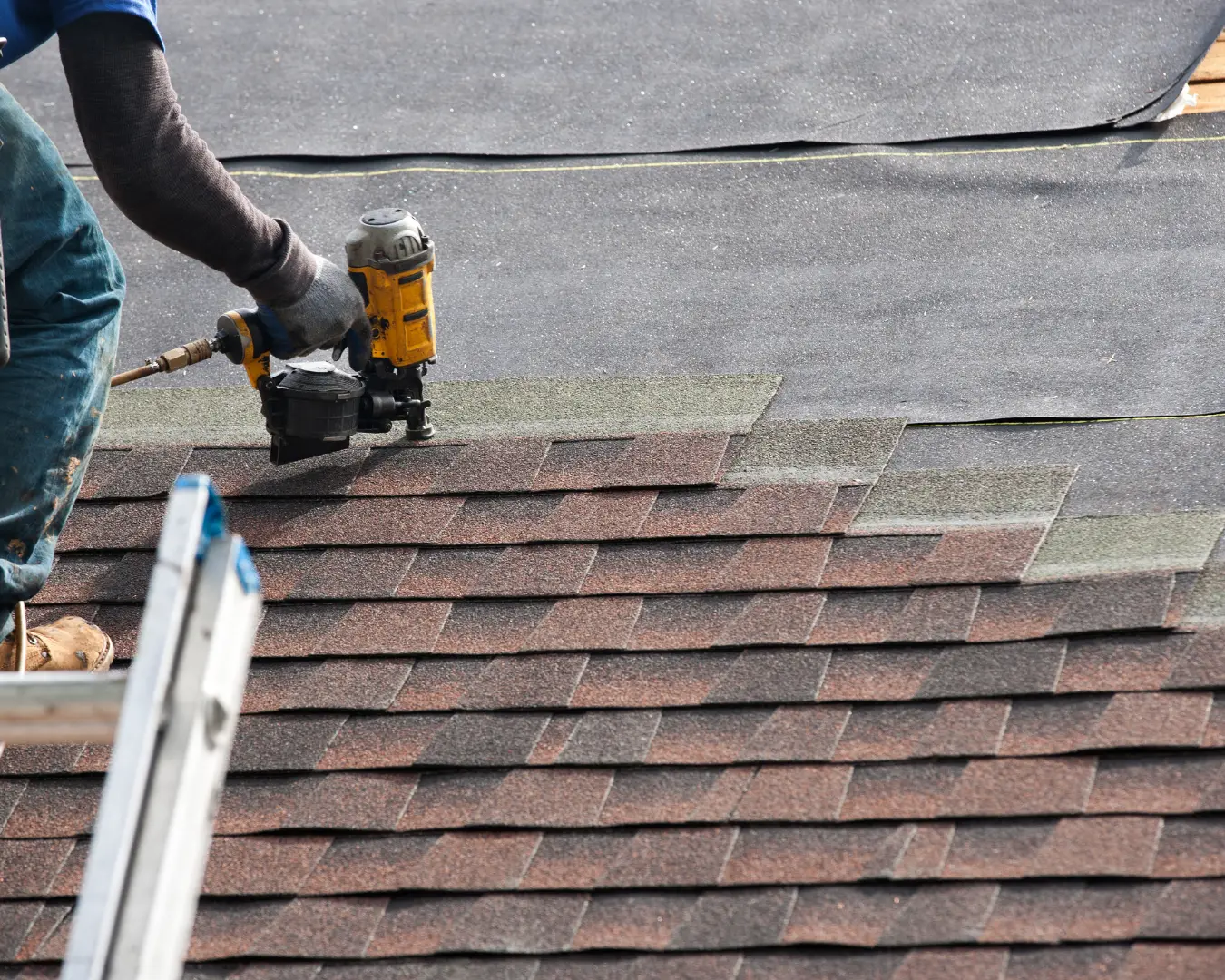
In twelve years of roofing the Lowcountry, we’ve almost never seen a roof fail out of nowhere. What we see instead are small warnings that went unnoticed — or noticed and postponed — until a manageable repair became a soaked ceiling.
The good news: you don’t need to climb a ladder to catch most of these. A few minutes of attention from the ground, the attic hatch, and the gutter downspouts will reveal nearly everything on this list. Here’s what to look for, roughly in the order homeowners tend to spot them.
1. Stains on ceilings or interior walls
A tan or brown ring on the ceiling is the classic tell, and it’s almost never as small as it looks. By the time water shows up on your drywall, it has already traveled through the roof deck, insulation, and framing — often several feet sideways from the actual entry point. In the Lowcountry, where humidity keeps materials from ever fully drying out, a stained ceiling can also mean mold is getting a head start above it. Mark the stain’s edge with a pencil; if it grows after the next afternoon thunderstorm, you have an active leak, not an old scar.
2. Shingle granules collecting in your gutters
Those coarse sandy granules aren’t decoration — they’re the armor that protects the asphalt beneath from UV damage. Some shedding is normal, especially on a newer roof. But when you flush a downspout and a small dune washes out, or the gutter troughs look like a gravel bed, your shingles are wearing thin. Coastal sun is brutal here: shingle surfaces can exceed 150°F on a July afternoon, and once granules go, the asphalt underneath bakes, cracks, and curls quickly.
3. Lifted, creased, or missing shingles after storms
After any named storm — or even a strong squall off the ocean — walk your property line and look up. Missing shingles are obvious, but the sneakier damage is a shingle that lifted in the wind and settled back down with a crease. That crease breaks the shingle’s seal, so the next gust peels it further and wind-driven rain gets underneath. Check the ground, too: shingle pieces in the flower beds or on the lanai screen mean the roof gave something up, even if you can’t see the gap from below.
4. Flashing gaps around chimneys, skylights, and vents
Most leaks don’t start in the field of the roof; they start where the roof meets something else. Flashing — the metal that seals chimneys, skylights, plumbing vents, and wall junctions — takes the worst of our salt air and thermal cycling, and sealants that last a decade inland can fail in half that time here. From the ground, look for flashing that’s visibly lifted, rusted, or separated from the masonry. If you can see a shadow line or gap where metal used to sit tight, water can see it too.
5. Sagging gutter lines or fascia
Stand back from the house and sight along the gutter run. It should be straight. A sag or a pulled-away section often means the fascia board behind it has gone soft with rot — usually because water has been backing up under the roof edge, wicking into the wood, or overflowing gutters packed with live-oak leaves. Sagging gutters are both a symptom of roof-edge trouble and a cause of more: once water stops draining properly, it finds its way behind the drip edge and into places it was never meant to go.
6. Daylight or moisture in the attic
Pick a bright morning, climb to the attic hatch, and leave the light off for a minute. Pinpoints of daylight through the roof deck are exactly what they look like: holes. While you’re up there, scan for dark streaks on the underside of the decking, rusted nail tips, matted insulation, or that unmistakable musty smell. In our climate, attic moisture may also point to a ventilation problem rather than a leak — but either way, it’s shortening your roof’s life and deserves a professional look.
7. Algae streaks and moss that have gone beyond cosmetic
Those long dark streaks on north-facing slopes are algae, and by themselves they’re mostly an appearance issue — common as palmettos around here. The line gets crossed when growth turns three-dimensional. Moss and lichen hold moisture against the shingle surface around the clock, and their root-like structures pry granules loose and lift shingle edges. If your roof has patches you could describe as fuzzy or spongy rather than streaky, the growth is now doing structural damage, and pressure-washing it yourself will strip granules and make things worse.
What to do next
One sign on this list, caught early, is usually a modest repair — often a few hundred dollars, not a few thousand. Two or three signs together, or any sign on a roof past its twentieth birthday, deserves a full professional inspection so you can plan ahead instead of reacting at 2 a.m. in a tropical storm.
Either way, the sequence is the same: document what you see with photos, note when it appeared, and get an experienced set of eyes on the roof itself — safely, with the right footwear and fall protection, which is our job rather than yours. Our roof repair crews handle everything from single-shingle fixes to storm damage, and if what your roof really needs is a routine once-over, our maintenance inspections exist to catch this entire list while every item on it is still cheap.
If your Bluffton, Hilton Head, or Lowcountry roof is showing any of these seven signs, Ragsdale Roofing and Innovations will come take an honest look for free — and tell you plainly whether it needs a repair, a plan, or just a recheck next season. Request your free estimate online or call us any hour at (843) 489-8966. Small problems stay small when someone answers the phone.